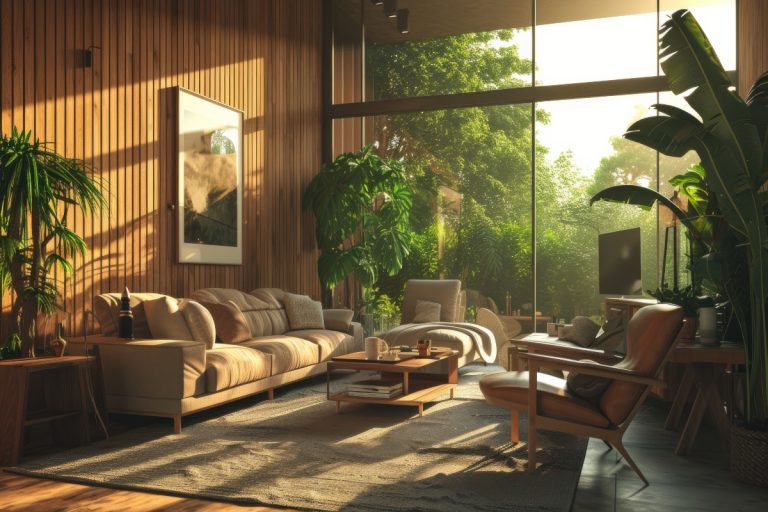
At Yolo Interiors, we’ve witnessed a remarkable transformation in how homeowners approach their living spaces. This biophilic home interior design guide reflects what we’ve learned over three decades of designing environments that strengthen our connection to nature.
Over our 30 years of experience, we’ve seen design trends come and go, but few have resonated as deeply as biophilic home interior design. This approach isn’t just another fleeting trend; it’s a fundamental shift toward creating spaces that nurture our innate connection to nature.
Biophilic home design represents more than adding a few plants to your living room. It’s about creating environments that enhance well-being, reduce stress, and foster a sense of harmony between indoor and outdoor spaces.
As award-winning designers, we’ve helped countless clients transform their homes into sanctuaries that celebrate the natural world.
Understanding Biophilic Design Principles
The foundation of biophilic home interior design rests on our evolutionary connection to nature. Humans have spent over 99% of their existence in natural environments, making our attraction to natural elements deeply ingrained in our psychology.
Research consistently shows that incorporating natural elements into interior spaces can reduce stress hormones by up to 15%, improve cognitive function, and enhance overall quality of life. These findings align perfectly with our design philosophy at Yolo Interiors, creating spaces that are as beautiful as they are beneficial to our clients’ well-being.
Effective biophilic home interior design tips are based on three key categories: direct nature connections, indirect nature connections, and spatial configurations.
Direct connections include actual plants, water features, and natural light. Indirect connections encompass natural materials, nature-inspired patterns, and artwork depicting natural scenes. Spatial configurations focus on creating views of nature and designing spaces that mimic natural environments.
Essential Elements of Nature-Inspired Interiors
Natural Light: The Foundation of Biophilic Spaces
Natural light serves as the cornerstone of effective biophilic home design. We prioritize maximizing natural light in every project because it directly impacts circadian rhythms, mood, and energy levels.
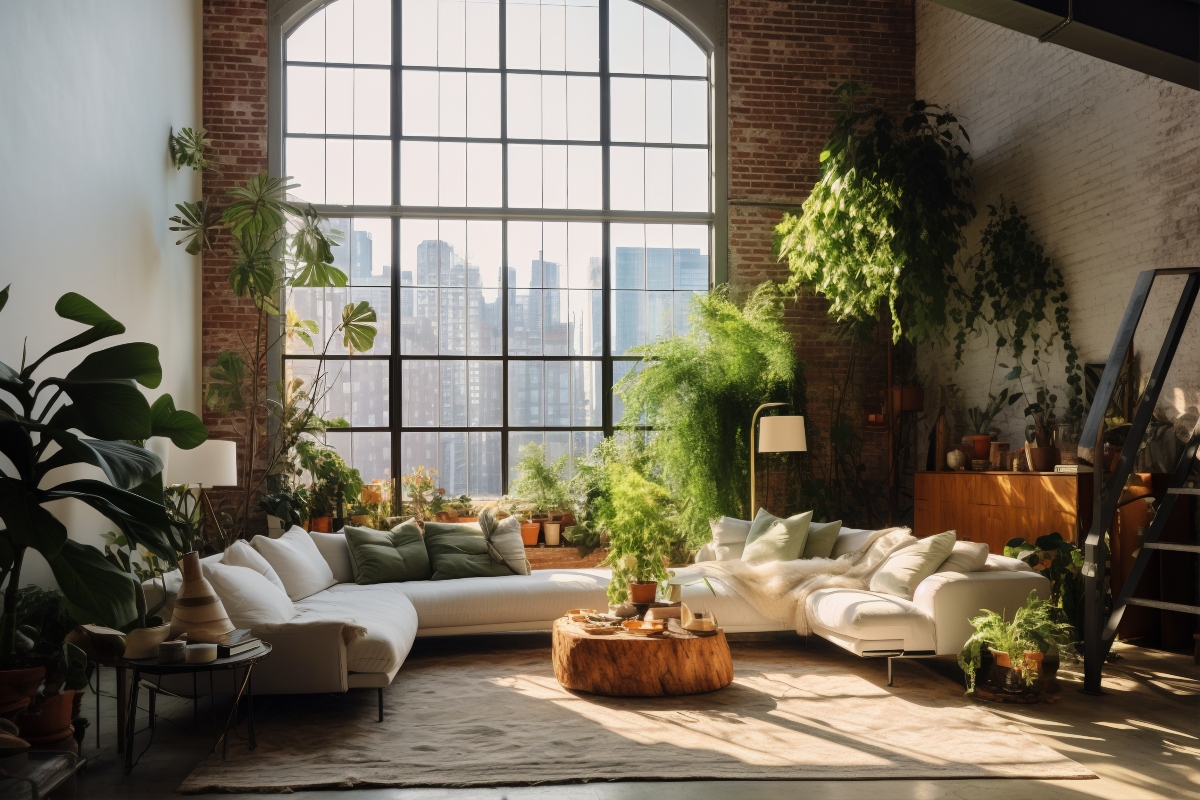
Consider these strategies for enhancing natural light:
- Replace heavy window treatments with light-filtering options like bamboo blinds or sheer curtains
- Install skylights in areas where additional windows aren’t feasible
- Use mirrors strategically to reflect natural light throughout the space
- Choose light–colored paint for walls and ceilings to bounce light around rooms
- Remove visual barriers between windows and living spaces
We often recommend clerestory windows for clients seeking privacy without sacrificing natural light. These high-placed windows flood spaces with daylight while maintaining visual privacy from neighboring properties.
Plant Integration and Living Walls
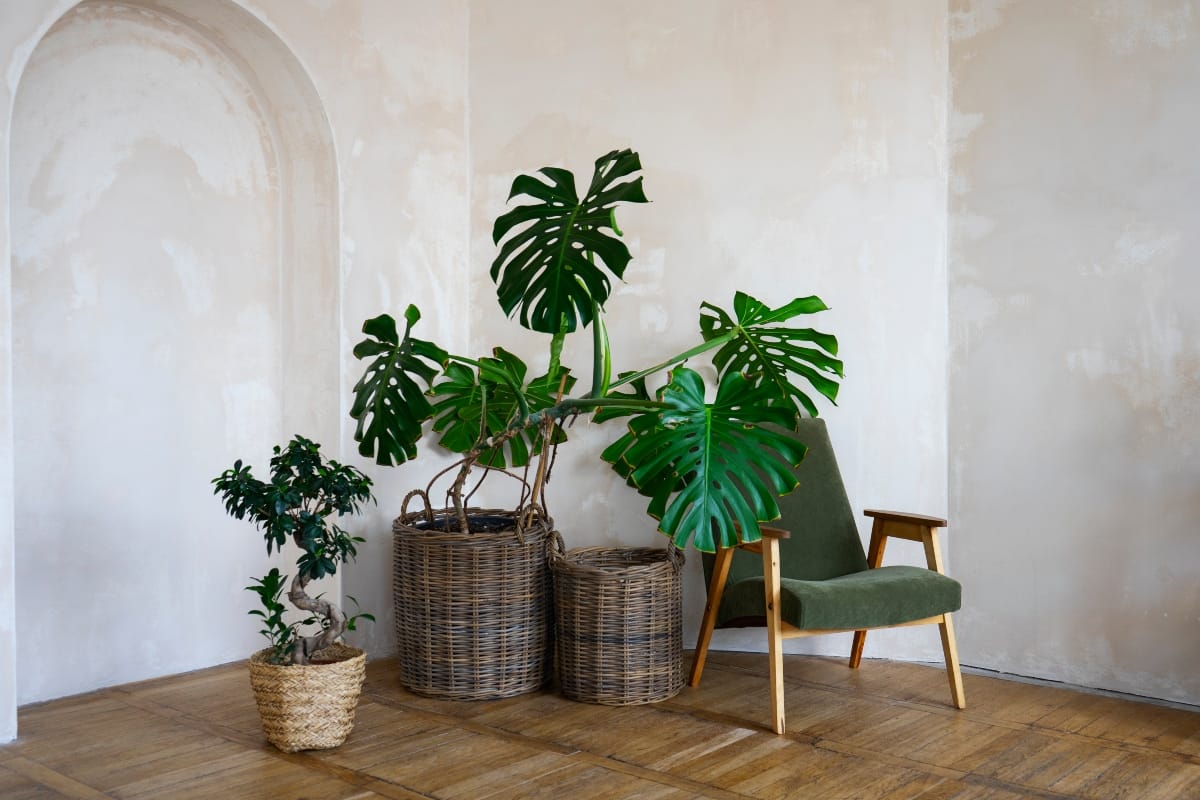
Nature-inspired decor reaches its pinnacle when we incorporate indoor plants and other living elements throughout the home. Plants serve multiple functions beyond aesthetics – they purify air, regulate humidity, and create focal points that draw the eye naturally.
Our approach to plant selection considers both design impact and maintenance requirements. We typically recommend starting with these resilient options:
- Snake plants for low-light areas and bedrooms
- Pothos for trailing effects and easy care
- Fiddle leaf figs as statement pieces in living areas
- Peace lilies for bathrooms and humid environments
- Rubber trees for dramatic height and glossy foliage
For clients seeking maximum impact, we design living walls that transform entire surfaces into vertical gardens.
These installations require careful planning for irrigation, lighting, and plant selection, but the results create breathtaking focal points that embody biophilic design principles for the home interior.
Natural Materials and Textures
The materials we choose directly influence how occupants experience a space. Sustainable interiors prioritize materials that tell the story of nature through their grain patterns, textures, and aging characteristics.
| Material Type | Applications | Benefits |
|---|---|---|
| Reclaimed Wood | Flooring, accent walls, furniture | Adds warmth, character, and reduces environmental impact |
| Natural Stone | Countertops, backsplashes, fireplaces | Provides durability, unique patterns, thermal mass |
| Bamboo | Flooring, cabinetry, decorative elements | Fast-growing, moisture-resistant, contemporary appeal |
| Cork | Flooring, wall treatments, accessories | Antimicrobial, sound-absorbing, comfortable underfoot |
| Jute & Sisal | Rugs, wall coverings, and baskets | Adds texture, neutral tones, and biodegradable |
We source materials that showcase their natural origins rather than hiding them. Live-edge wood tables, stone with visible fossils, and bamboo that maintains its nodes all celebrate the beauty of imperfection found in nature.
Water Features and Natural Sounds
Incorporating water elements into biophilic home design engages multiple senses simultaneously. The sound of flowing water masks unwanted noise while creating a calming atmosphere that reduces stress and promotes relaxation.
Our water feature designs range from subtle to spectacular. Tabletop fountains work well in compact spaces, while floor-to-ceiling water walls create dramatic statements in larger rooms. We’ve installed everything from koi ponds in sunrooms to rain chains that guide water from roof gutters into decorative basins.
The key is matching the water feature scale to the space and ensuring proper maintenance access. We always incorporate high-quality pumps and filtration systems to keep water clean and clear with minimal upkeep.
Color Palettes That Connect to Nature
Nature-inspired decor extends to color selection, where we draw inspiration from landscapes, seasons, and natural phenomena. Earth tones provide grounding effects, while blues and greens evoke the calming presence of water and foliage.
Our preferred biophilic color palettes include:
- Forest floor: deep browns, moss greens, and warm grays
- Coastal breeze: soft blues, sandy beiges, and driftwood grays
- Desert sunset: warm terracottas, sage greens, and golden yellows
- Mountain mist: cool grays, slate blues, and crisp whites
- Prairie grass: wheat tones, olive greens, and sky blues
We apply these colors in varying intensities throughout a space, using color theory to ensure the palette feels cohesive without overwhelming the senses. This approach maintains visual balance while supporting the calming, nature-connected feel central to biophilic design.
Furniture Selection for Biophilic Interiors
Furniture in biophilic home interior design should echo natural forms and materials. We seek pieces that feature organic curves, natural grain patterns, and earth-inspired finishes.
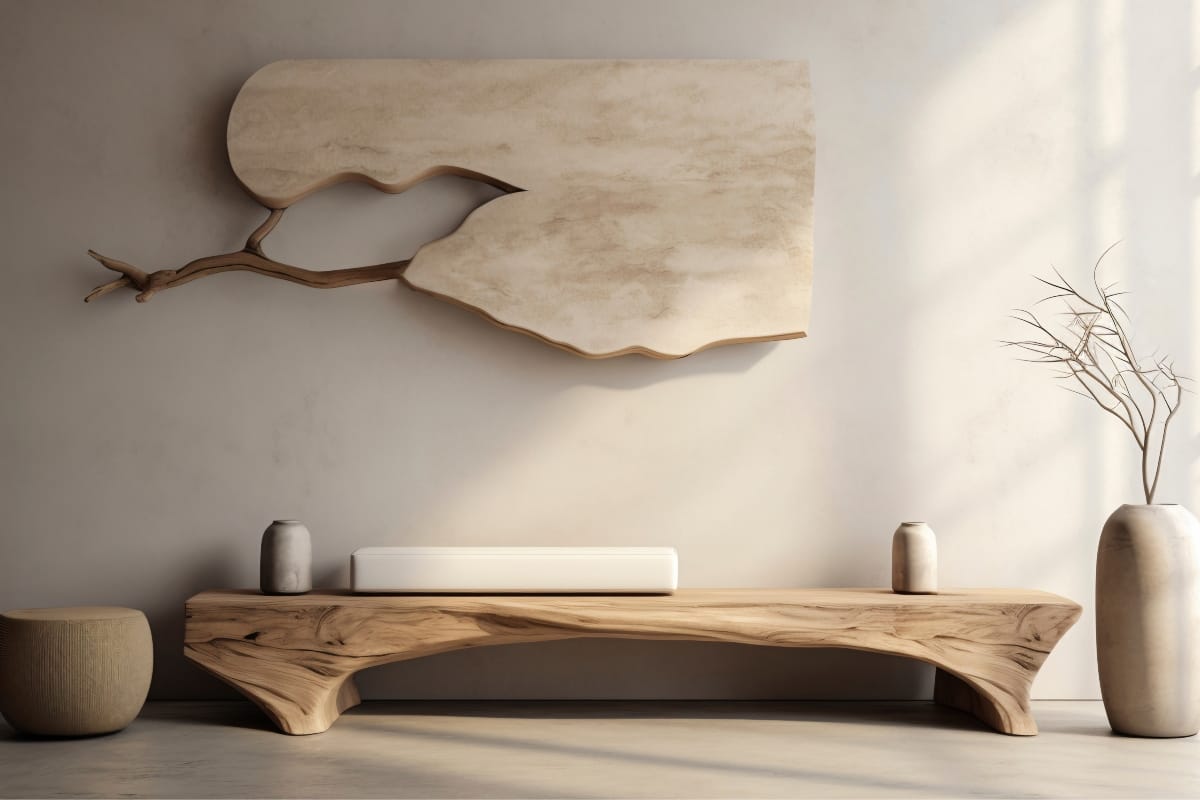
Key furniture characteristics include:
- Curved edges that mimic natural forms rather than sharp geometric lines
- Mixed materials combining wood, stone, metal, and natural fibers
- Modular designs that can be reconfigured like natural systems
- Handcrafted elements that show the maker’s touch and slight imperfections
- Sustainable sourcing from responsibly managed forests and recycled materials
We particularly love live-edge dining tables that preserve the tree’s natural boundary, and chairs woven from natural fibers that create visual and tactile interest.
Room-by-Room Biophilic Applications
While many interior design styles emphasize visual themes, biophilic design adapts to each room’s function to support well-being and natural flow.
Living Spaces
The living room offers the greatest opportunity for biophilic home design implementation. We typically anchor these spaces with large plants or living walls, complement them with natural material furniture, and enhance the atmosphere with water features.
Consider positioning seating to face natural views when possible. If views are limited, create internal focal points using aquariums, terrariums, or large-scale nature photography.
Bedrooms
Bedrooms benefit enormously from biophilic design principles that support restful sleep. We use low-light plants like snake plants or peace lilies, natural-fiber bedding, and wood furniture with gentle curves.
Blackout capabilities remain important, but we recommend window treatments that can be easily opened to welcome morning light. Natural alarm clocks that simulate sunrise can enhance circadian rhythm regulation.
Kitchens
Sustainable interiors shine in kitchen applications where we can incorporate herb gardens, natural stone surfaces, and bamboo accessories. Window-mounted herb gardens provide fresh ingredients while connecting cooks to their food sources.
We love installing kitchen windows over sinks to provide nature views during food preparation and cleanup. When exterior views aren’t available, we create interior herb walls or small greenhouse windows.
Bathrooms
Bathrooms naturally lend themselves to biophilic home design through their water connection. We enhance this with humidity-loving plants, natural stone tiles, and wood accents treated for moisture resistance.
Rainfall showerheads and freestanding tubs can evoke natural water experiences. Skylights in bathrooms create spa-like atmospheres while providing necessary ventilation.
Technology Integration in Biophilic Design
Modern biophilic home interior design seamlessly integrates technology to support natural systems. Today, thoughtful AI integration helps automate routines like circadian lighting adjustments, smart irrigation, and environmental monitoring that keep both plants and people thriving.
We install sensors that monitor humidity, air quality, and light levels, ensuring optimal conditions for both plants and occupants. These systems can alert homeowners to maintenance needs or automatically adjust environmental controls.
Automated window treatments can optimize natural light throughout the day, opening during peak sunlight hours and closing when privacy is needed. Some clients choose smart glass that can transition from clear to opaque without window coverings.
Working with a Residential Interior Designer
Implementing biophilic home design successfully requires careful planning and expertise. As residential interior designers, we bring knowledge of plant care requirements, natural material properties, and environmental systems integration.
Our process begins with assessing your home’s natural light patterns, existing architectural features, and lifestyle requirements. We then develop a comprehensive plan that incorporates biophilic elements gradually or through complete renovations.
We work closely with horticulturists, craftspeople, and environmental specialists to ensure every element functions beautifully long-term. Our supplier network includes over 500 trusted partners who share our commitment to quality and sustainability.
Maintenance and Long-term Success
Sustainable interiors require ongoing care to maintain their beauty and function. We provide detailed care guides for all living elements and establish maintenance schedules with trusted service providers.
Plant care varies by species and location, but general principles include:
- Monitor watering needs based on season and indoor humidity levels
- Rotate plants periodically to ensure even growth and light exposure
- Prune regularly to maintain shape and encourage healthy growth
- Fertilize appropriately based on plant species and growth rates
- Replace plants as needed to maintain the overall design vision
Natural materials also require specific care. Wood surfaces need periodic conditioning, stone requires sealing, and natural fiber textiles benefit from professional cleaning.
Investment and Value Considerations
Biophilic home interior design represents a significant investment in both immediate comfort and long-term property value. Studies show that homes incorporating biophilic elements sell faster and command higher prices than comparable properties.
The health benefits translate to reduced healthcare costs and improved productivity for those working from home. Energy savings from increased natural light and improved insulation from plant walls can offset initial investment costs over time.
We help clients prioritize biophilic improvements based on budget and impact. Starting with high-impact, lower-cost elements like plants and natural textiles allows homeowners to experience benefits immediately while planning larger renovations.
Common Challenges and Solutions
Implementing biophilic home interior design tips isn’t without challenges. Low light conditions can limit plant choices, but we select appropriate species and supplement with grow lights when necessary.
Maintenance concerns often worry clients, but we design systems that minimize upkeep while maximizing impact. Automated irrigation, appropriate plant selection, and quality materials reduce ongoing maintenance requirements.
Budget constraints can limit scope, but biophilic design principles apply at every price point. Even small changes like replacing synthetic materials with natural alternatives or adding a few well-chosen plants can transform a space’s feeling.
Allergies to pollen or specific plants require careful species selection and air filtration systems. We work with allergists when necessary to create healthy environments for sensitive individuals.
Seasonal Adaptations and Year-round Appeal
Nature-inspired decor should evolve with the seasons to maintain a connection to natural cycles. We design flexible systems that accommodate seasonal plant changes and adjustable lighting schemes.
Winter months might emphasize evergreen plants and warm lighting, while summer allows for flowering species and brighter, cooler tones. Seasonal textile changes using natural fibers help spaces feel fresh and connected to external conditions.
We often incorporate seasonal elements like branches, pinecones, or seasonal flowers in strategic locations. These temporary additions keep spaces feeling dynamic and connected to natural rhythms.
Future Trends in Biophilic Design
The future of biophilic home design includes advances in smart growing systems, air-purifying materials, and biomimetic design elements. We’re seeing development in self-watering plant systems, pollution-absorbing wall materials, and furniture that adjusts to mimic natural movements.
Vertical farming systems are becoming more sophisticated and aesthetically pleasing, allowing homeowners to grow food while creating beautiful living walls. LED growing lights now mimic full-spectrum sunlight while consuming minimal energy.
Virtual reality and augmented reality technologies are beginning to supplement physical biophilic elements, though we believe these should enhance rather than replace actual natural connections.
Creating Your Biophilic Sanctuary
This biophilic home interior design guide is designed to help you build spaces that nurture both body and spirit, offering practical ways to integrate natural elements that align with your lifestyle. The principles we’ve explored provide a framework for developing spaces that celebrate our connection to the natural world while supporting modern living requirements.
Success comes from thoughtful integration rather than overwhelming additions. Start with elements that resonate most strongly with your lifestyle and gradually build a comprehensive biophilic environment that reflects your personal connection to nature.
Final Thoughts
Biophilic home interior design represents more than an aesthetic choice – it’s an investment in well-being, sustainability, and connection to the natural world.
At Yolo Interiors, we’ve seen firsthand how these principles transform not just spaces, but the lives of those who inhabit them. From improved air quality and reduced stress levels to enhanced creativity and better sleep, the benefits extend far beyond visual appeal.
Whether you’re considering a complete renovation or simple additions like plants and natural materials, biophilic design offers endless possibilities for creating spaces that truly nurture the human spirit.
Let us help you create a home that brings the outside in and supports your best life. Contact our team to begin your biophilic design journey today!
Pricing for biophilic design projects varies based on scope, materials, and complexity of natural systems integration.